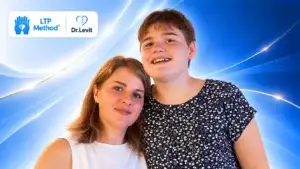
Treating ASD in Children: Mira's Inspiring Story
The story of Nastya and her daughter Mira is a shining example of how properly managed treatment for ASD in children can dramatically transform the life of not only the child but the entire family. This story is more than just an inspiring testimony. It's a result achieved thanks to the individualized approach and professionalism of the team at Dr. Levit's clinic.
The Beginning of the Journey: Warning Signs and Disappointment with Classical Methods
Before treatment, Mira exhibited all the key signs of autism: lack of eye contact, echolalia, tantrums, running away, and poor speech comprehension. Her parents felt helpless, as traditional treatments weren't producing the desired results. They desperately searched for a way to help, unaware that effective treatment for ASD in children was possible in a short period of time.
The first breakthrough: conscious response instead of automatic phrases
After starting the 15-day course at Dr. Levit's clinic, changes were noticeable almost immediately. After just the first session, Mira consciously answered the question, "Shall we go for a walk?" for the first time. She said, "Yes, I'll go for a walk." This became the first milestone confirming the effectiveness of the method and the key moment when the parents realized that treating ASD in children could be effective.
Physiological improvements: water, food and digestion
Positive changes also affected her physiological state. The girl began drinking more water, her digestion improved, and she developed a craving for new foods. She began trying buckwheat, cucumbers, and meat—foods she had previously resisted. All this confirms that treating ASD in children requires a comprehensive approach , including working not only with the psyche but also with the body.
Self-care skills: from the refrigerator to scrambled eggs
One of the most notable achievements was mastering everyday tasks. Mira learned to open bottles, heat food, take groceries out of the refrigerator, and fry eggs independently. These behaviors previously seemed unattainable. Today, she does all of these tasks with interest and without adult assistance, demonstrating the progress a child can make with effective ASD treatment.
Emotional and cognitive development: recognition, memory, counting
The emotional and cognitive breakthrough deserves special attention. Mira began recognizing her parents in photos and calling them by name. She memorized the phone code—"8888"—and enters it out loud. This is the result of the intensive neuropsychological work provided by the clinic. The parents are convinced that treatment for ASD in children truly works if approached correctly.
Play and motor skills: independence and creativity
Previously, the girl avoided play. Now she independently assembles construction sets, plays with robots, and simulates situations. Mira doesn't allow anyone to interfere with her activities—and this is a key indicator of initiative and maturity. Through therapy, treatment for ASD in children can include stimulation of motor skills and development of imagination.
Social Behavior and Safety: No More Running Away
Mira has stopped running away. She holds her mother's hand, responds to requests, and communicates pain by pointing to the location and naming it: "stomach" or "finger." These are signs that weren't present before. Her social behavior has improved so much that her mother feels safe. This result confirms that proper treatment of ASD in children improves social adaptation.
Everyday skills: clothing, requests and independent actions
Mira dresses herself, zips up her jacket, and puts on her hat. She understands what things she needs to bring her mother and can choose the right ones. This isn't just helping adults; it's a demonstration of logic and contextual understanding. Such changes are impossible without structured and in-depth therapy. All this has become possible thanks to the approach offered by modern treatment for ASD in children.
Support for parents: training and workshops
Working with the parents played a huge role. Nastya shares that they learned more in 15 days at the clinic than in years of visiting speech therapists. They were taught how to work with a child with ASD , how to understand their cues, and how to help without pressure. This made the process not only therapeutic but also an internal transformation for the family.
Playing with Fantasy: Plot, Speech, and Reaction to Cartoons
Mira began talking to toys, inventing stories, and applauding cartoon characters. She recognizes languages, says "bravo" in Italian, and shoos away mosquitoes. All this demonstrates a high level of perception and responsiveness to the outside world. The parents are convinced that treatment for ASD in children must take into account the emotional and communicative spheres.
Conclusion: Treatment of ASD in children is possible and has been proven.
Nastya emphasizes that without the video testimonials from other parents, she wouldn't have decided to go. Now she's becoming part of this support system herself, because she's convinced that treating ASD in children is possible if you use a systematic approach , rather than relying on chance.
Mira's story is not an example of a miracle, but of the competent, comprehensive work of specialists and her family.