Changes in a child's development after vaccination
What is important for parents to note and what to do if new symptoms appear or a relapse occurs.
On the connection between vaccination and autism
Masha, developmental setback after vaccination:
Muhammad, 3,5 years old, complications after DPT
Another case from Dr. Levit's practice
When asked whether to vaccinate a child or not, Dr. Lev Levit has a clear answer.
Post-vaccination complications can be a real family tragedy. Recently, a mother of a child suffering from hydrocephalus, muscle atrophy, and a heart defect came to us. However, the child was initially completely healthy. The day after the hepatitis B vaccination, the boy turned yellow, developing a severe form of jaundice and meningoencephalitis, which led to damage to the entire central nervous system.
"Is such a terrible disease really directly related to vaccination? We're told that vaccines are safe, that there's no link between autism and vaccination..."
"My experience suggests otherwise. I encounter vaccination victims far too often. Believe me, a link between autism and vaccines won't be found until there's a real, independent study. If the research is conducted by the same institutes that create the vaccines themselves, what can we talk about? I'd like to see the results of a real study. A very simple, yet objective one. This would require examining a group of vaccinated and unvaccinated children living in similar social and living conditions and assessing their health."
I'm certain that vaccinated children will have an order of magnitude higher incidence of cancer, neurological diseases, and metabolic problems. Unfortunately, the side effects of vaccination are being deliberately ignored and glossed over.
Have you noticed any changes after vaccination?
Find out what to look for and how to help your child.
To vaccinate a child or not
I've been working with children with developmental delays and autism since 1995. Initially, my primary patients were children with motor disorders and developmental delays. I also received many cases of neonatal trauma, brain hypoxia, and intrauterine damage. But then, children with unusual behavior and autism spectrum symptoms began coming to the clinic more and more often.
These children lacked contact with the outside world, often exhibited picky eating, an inability to think, and obsessive movements. Symptoms of the disease did not appear immediately after birth, as in children with typical developmental delays, but between the ages of 12 and 17 months. Parents noted that their children had developed normally until 12 and 13 months. But suddenly, tantrums began, and the children stopped recognizing loved ones and pronouncing sounds and words as they had before. After two years, the regression intensified. However, the parents did not point out that the regression was accompanied by intensive vaccinations.
– So, parents are not sufficiently informed about the side effects of vaccines?
– In the classic version, a child receives 23 or more vaccines by the age of one. Vaccine instructions note possible complications and side effects. These include more than just skin redness and fever. Severe damage to the central nervous system and internal organs, including meningoencephalitis and panencephalitis, can occur.
Since the mid-90s, the number of vaccines administered to children has increased dramatically. All of them contain a number of toxic substances, including formalin, aluminum, mercury, preservatives, and antibiotics. Vaccines contain biological residues from the culture media used to grow viruses, chromosomes, and animal DNA, not to mention the viruses themselves. All of this is injected directly into the bloodstream.
Vaccines contain small amounts of toxicants, but when intensive vaccination occurs throughout the year, both the toxic substances contained in the vaccines and the body's reactions to the vaccination itself accumulate. Intensive vaccination without adherence to vaccination rules and schedules can even lead to the development of autoimmune diseases.
Should you vaccinate your children?
— What would you say to parents who are unsure whether to vaccinate their children? — Think carefully before making a decision. We know that at birth, a child inherits immunity from childhood infectious diseases from the mother for the first year of life. No one has conducted research on how the body reacts to vaccination if it already has antibodies to a given disease. It is a priori assumed that a child has no antibodies. A child should survive all childhood infectious diseases for two to three years, and this will give them the opportunity to develop a healthy immune system. Of course, all these diseases are dangerous, but with the availability of antibiotics, antipyretics, and good social and living conditions, these illnesses are mild. You shouldn't trade mumps for diabetes, or measles for autism. I'm not talking about completely abolishing vaccinations. But you need to understand the necessity of each vaccine and its purpose. The hepatitis B vaccine is administered immediately after birth. But is this absolutely necessary? Hepatitis B is transmitted through sexual intercourse involving damage to the skin and mucous membranes. Direct infection through blood from unsterile, reusable syringes is also possible. It's possible to become infected through a blood transfusion from a sick donor to a healthy person. In modern clinics, this is virtually impossible. The question arises: why vaccinate newborns if there are no other routes of transmission?
Did your child start behaving differently after the vaccination?
Get a free consultation with LTP® specialists and learn what to look out for and what steps to take next.
One of the main contraindications to this vaccine is intolerance to flour products. This means that the hepatitis B vaccine itself can trigger this condition.
This may be one of the main factors behind the widespread intolerance to flour products in children. It manifests itself as a number of disorders in both autistic and developmentally delayed children. The problem is so serious that stores are opening entire sections for people on a gluten-free diet. My advice to parents: first and foremost, avoid hepatitis B vaccinations.
- You don't have to vaccinate your children if you decide to do so; you have the legal right to do so. But if you do decide to vaccinate your children, at least stick to the strict schedule.
- Try not to administer multiple vaccines at once. It's enough to administer one vaccine, and then, if the child is completely healthy, administer the next one two to three months later.
- It is strictly forbidden to vaccinate against the background of inflammation, allergic diseases, or if the child reacts to the child with a fever, seizures, or other side effects.
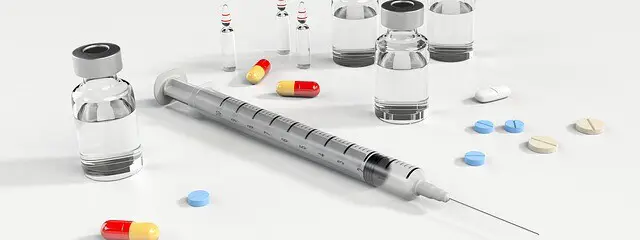
The vaccine must be administered subcutaneously to ensure slow absorption. Not all nurses adhere to this, administering it intramuscularly, directly into the bloodstream. Furthermore, they ignore the basic vaccination schedule.
If a parent misses a vaccination, their child may receive two or three vaccines at once! Children often suffer from ear infections and sinusitis. No one considers that this could be a reaction to a previous vaccine. Children receiving these conditions are given the next vaccine, which is strictly prohibited. Parents should be vigilant and remember that there is a serious risk of developing post-vaccination complications.
Prepared by Anna Reznikov
Also on the topic:
An official document signed by the Chief Sanitary Doctor of the Russian Federation, titled "Immunoprophylaxis of Infectious Diseases. Investigation of Post-Vaccination Complications. Guidelines": https://docs.cntd.ru/document/
1. Is it true that vaccinations can cause autism?
Answer: Dr. Lev Levit, a physician with 30 years of experience, asserts that there is a link between vaccinations and autism that cannot be ignored. He notes that autism symptoms in children often appear after 12 months—precisely during the period of intensive vaccination. Although mainstream medicine does not recognize this link, Dr. Levit insists on the need for independent studies that consider the health of vaccinated and unvaccinated children under similar conditions.
2. What are the most common complications after vaccination?
Answer: In addition to standard reactions such as redness or fever, Dr. Levitt points to more serious consequences: meningoencephalitis, panencephalitis, autoimmune diseases, central nervous system damage, and metabolic and digestive disorders. He cites real-life examples of healthy children experiencing severe, irreversible complications after vaccination.
3. What substances are contained in vaccines and can be dangerous?
Answer: According to Dr. Levitt, many vaccines contain toxic components: formalin, mercury, aluminum, preservatives, antibiotics, and biological residues (animal DNA, culture media). With frequent administration of vaccines, these substances accumulate in the body, which can cause immune system dysfunction and the development of autoimmune diseases.
4. How can parents understand that a complication is related to a vaccination?
Answer: Sometimes the reaction is immediately noticeable—high fever, seizures, vomiting, crying. But often, symptoms appear later: behavioral changes, loss of skills, and regression. It's important for parents to monitor their child's condition before and after vaccination. If any unusual reactions occur, stop further vaccinations immediately and consult a doctor or homeopath.
5. Should we completely avoid vaccinations?
Answer: Dr. Levitt doesn't advocate completely eliminating vaccinations. He emphasizes the importance of an informed approach: the appropriateness of each individual vaccine must be assessed. For example, the hepatitis B vaccine is administered in the first hours of life, although transmission routes for newborns are extremely rare. He recommends avoiding vaccinations unless absolutely necessary and adhering to a strict schedule, administering no more than one vaccine at a time.
6. What should every parent know before vaccinating their child?
Answer: First of all, you have the legal right to refuse vaccinations. If you decide to vaccinate, make sure your child is completely healthy and has no signs of inflammation, allergies, or reactions to previous vaccines. The vaccine should be administered subcutaneously (not intramuscularly) to avoid a severe reaction. It is important not to combine vaccinations or administer them during periods of acute illness or disease. This will help reduce the risk of serious complications.