
🧠 Expertise of the LTP method: scientific substantiation of the connection between nutrition, the gut and child development When it comes to helping children with ASD,


🧠 Expertise of the LTP method: scientific substantiation of the connection between nutrition, the gut and child development When it comes to helping children with ASD,

The child does not speak: when should you worry and what to do? The query "the child does not speak, is it autism" is one of the most common
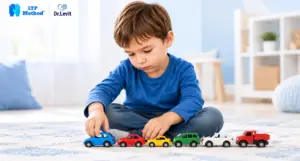
Why doesn't my child play with toys the way adults expect? When a child doesn't play with toys, many parents become concerned.
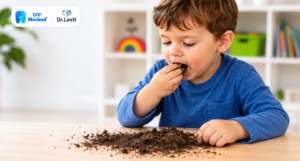
🌱 Does a child with autism eat dirt, sand, or inedible objects? Why does this happen and how does the LTP® method work?

Why does a child with ASD run away from their parents? What's really behind this behavior? 🏃♂️ One of the most frightening

The first signs of autism in a child: how to understand that your child has ASD? In this article, you will learn ✅ what the first

Cartoons and autism: the main question that worries parents Cartoons and autism are one of the most popular queries among parents of children
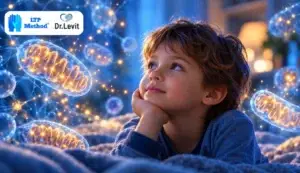
🧬 What are mitochondria and why are they increasingly being discussed in autism (ASD)? Mitochondria and autism are one of

Why does a child know words but not understand spoken language? Many parents notice that their child already knows dozens or even hundreds

😴 A child with autism sleeps poorly: why he wakes up at night and what can really help If a child with autism sleeps poorly,

Dolphin therapy for autism: does it really help a child with ASD? 🐬 Dolphin therapy has been one of the most popular therapies for many years.

🧠 Vitamins for autism: Why might a child's body lack resources for development? Many parents of children with autism spectrum disorders

🧠 How the gut can affect the condition of a child with autism: what is the gut-brain axis and why is everyone talking about it?

🤔 Candida and autism is one of the most discussed issues among parents of children with ASD. Many parents of children with disorders

Candida and autism: Why the problem may be deeper than it seems? 🍭🧠 Many parents of children with ASD, speech delay, and developmental delays

Aggression in a child with ASD and speech delay: why do children bite, hit themselves and others When a child hits himself, bites, pushes,

LTP® Method: A Systematic Approach to the Child's Condition and Development When a child has ASD, speech delay, difficulties understanding speech,
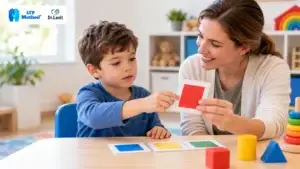
🧩 ABA therapy for autism: why sessions don't always help a child develop in real life. A child has been doing ABA therapy for months. He's learned

The child does not point: when the pointing gesture appears and why it may not be there The pointing gesture is one of the important
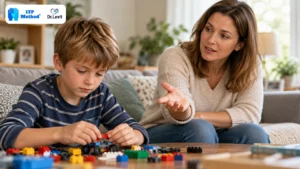
🤍 My child can't hear when he's called—what's the reason? If a child can't hear when he's called, many parents
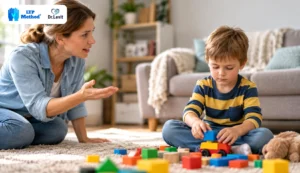
The child doesn't respond to his name - is this autism or not? You call the child: "Misha!" There is no response. Again: "Misha!" He

The child does not respond to his name: reasons, warning signs, and what parents should do 🤍 The child does not respond to his name - why
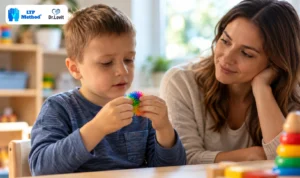
🔄 Stimuli in children: what they are, why they occur, and when you should pay attention. The child waves his arms, swings, jumps, walks

🧩 Cartoons and autism: can cartoons cause ASD? Many parents of children with autism spectrum disorders ask themselves: can cartoons cause ASD?
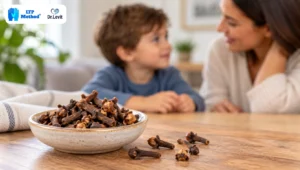
Carnation in Autism Spectrum Disorders (ASD): Functional Support in the LTP® Method Parents of children with autism spectrum disorders (ASD) are increasingly interested in the connection

How Epstein-Barr virus (EBV) affects speech development in children with ASD: Speech delay, lack of understanding of spoken language, unstable sleep

Cytomegalovirus (CMV) Cytomegalovirus (CMV) is a virus from the herpesvirus family that most people encounter in childhood. After the primary infection

🧩 ABA therapy and autism: why learned responses are not speech development ABA therapy for autism is often promoted as an effective method

Can autism be cured in a child? Results and parents' stories. Can autism be cured in a child? This is a question that parents often ask.
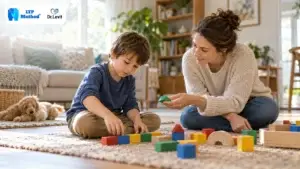
🧩 How is autism expressed in children: the main signs and manifestations of ASD Many parents are concerned about the question: how is autism manifested in

Stims in autism are one of the most common and noticeable signs of ASD. That's why many parents ask, "Why is my child flapping his arms?"

Changes in a child's development after vaccination. What is important for parents to note and what to do if new symptoms appear or a relapse occurs.
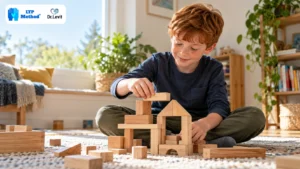
It is important for parents to learn to interact with their child—this increases the chances of rehabilitation and improves the treatment process.
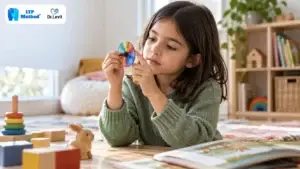
Signs of autism in children: how to recognize the first symptoms and what parents should do Signs of autism in children can manifest themselves in very different ways.

🔍 Why is it important to know the causes of autism in children? Many parents ask: “Where does autism come from? Why does one child develop normally, while

Nutritional aspects of autism: where to start if your child only eats a few foods? Nutritional aspects of autism are one of the
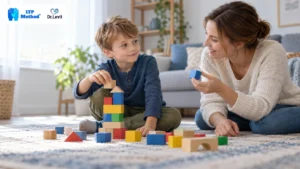
🧠 How to distinguish developmental delay from autism: 5 key differences that save time More and more parents are asking the question: how to distinguish developmental delay from autism

Autism: a test for children - how to understand if a child needs help 🧠🧩 Modern parents are increasingly faced with anxiety

How autism manifests itself in children: important signs that cannot be ignored Autism is not a disease, but a neurodevelopmental disorder that affects

Autism: types, characteristics and approaches to recovery Autism is not just a single condition, but a wide range of neurodevelopmental disorders, united

Online Autism Screening: 10 Key Questions to Help You Recognize Signs of Autism Online autism screening is a convenient

Autism, or autism spectrum disorder (ASD), is a complex condition that affects a child's physiological health, communication, social interactions

Treatment of autism in children: methods, stages and an integrated approach Treatment of autism in children is one of the main questions that arises

Navigating the world of autism can be a challenging and often overwhelming experience for parents. From navigating the complex network of healthcare providers

The original vitamin therapy using the LTP method is an innovative approach to enriching children's diets with essential vitamins and minerals for physiological recovery.

Overcoming Challenges: Understanding the Complexities of Childhood Developmental Disabilities The prevalence of childhood developmental disabilities is increasing, highlighting the need for increased understanding of the true

Autism, or autism spectrum disorder, is a complex disorder of the brain that results in behavioral difficulties,

In autism, one of the clearly expressed signs of this condition, by which this disorder is diagnosed, is stereotypy (stimuli, self-stimulation, self-regulatory behavior).

Echolalia is a regular part of a child's development as they learn to speak and communicate their needs. Echolalia often accompanies early childhood autism.

Results from the traditional autism rehabilitation system are achieved through years of visiting specialists. A new treatment method—

ZPR is a complex and borderline condition. Currently, it is rarely encountered in its pure form (usually accompanied by elements of ASD).
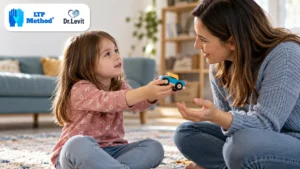
🗣️ Speech development in autism: how to help a child start talking and communicating. Does a child with autism not speak? Does he know individual words?

🧩 Autism in children: causes, risk factors, and what parents can do 📊 Autism is one of the fastest-spreading disorders
🧩 Autism spectrum: types, characteristics and diagnosis 📌 What are autism spectrum disorders (ASD) In recent years, specialists have recorded a significant

🧩 Causes of autism and treatment of childhood autism at the Dr. Lev Levit Center 📌 In this article we will talk about the causes