👁 Why a child with ASD doesn't make eye contact — reasons and solutions using the LTP® method
Meta description (up to 160 characters):
Why doesn't a child with autism make eye contact? What does avoidance of eye contact mean in ASD, and how does the LTP® method help restore natural gaze?
Key phrase: a child with autism does not make eye contact
(occurs 8 times in the text in different forms)
💭 Why doesn't a child with autism make eye contact?
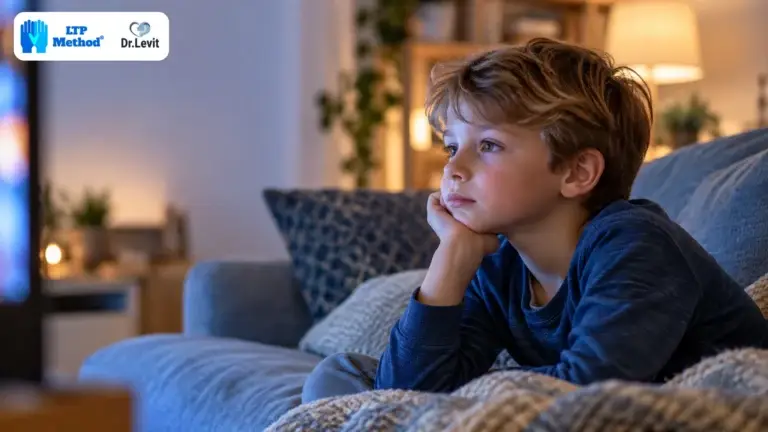
Many parents of children with ASD are faced with the fact that a child with autism does not make eye contact.
He looks away, seems to be “within himself”, and does not respond to emotions.
This causes pain and anxiety:
"He doesn't see me? He doesn't want to communicate? Or he just can't?"
Actually a child feels and understands, but his brain reacts differently.
Avoiding eye contact in autism is not a refusal to communicate, reaction to internal overload.
🧠 Why do children with autism avoid eye contact?
Eye contact is a complex neural process.
When a child with ASD makes eye contact, areas of the brain responsible for emotion, attention, and empathy are activated.
Research ( Yale Child Study Center, Nature Communications, 2023 ) has shown:
-
In children with autism, looking into the eyes activates the fear zone (amygdala) ;
-
the brain perceives eye contact as stress or a threat ;
-
sensory hypersensitivity makes the look too “bright” and unpleasant.
Thus, a child with autism does not look into the eyes not because of indifference , but because his nervous system is overloaded.
⚡ Physiological reasons why a child with ASD does not make eye contact
1️⃣ Neuroinflammation and brain stress
With chronic inflammation and oxygen deficiency, the brain operates in "defense mode." Any visual stimulus is perceived as a threat.
Read more about the causes of inflammation in the article 👉 Autism is not genetics, but brain inflammation..
2️⃣ Vitamin and mineral deficiencies
A deficiency of vitamins B, D3, E and magnesium impairs neuronal function and the ability to perceive signals.
Learn more about vitamins - Brain Deficits and Biochemistry in Autism.
3️⃣ Problems with the intestines and microflora
Through the gut-brain axis, gastrointestinal inflammation increases anxiety and reduces the child's sociability.
Read more 👉 Nutrition and Autism: Why It All Starts in the Gut.
4️⃣ sensory overload
The brain of a child with ASD may be hypersensitive to light, sound, and touch. Looking into their eyes can be perceived as a strong stimulus.
🌿 How the LTP® Method Helps Restore Eye Contact in Autism
The LTP® (Levit Therapeutic Principles) method , created in Israel in 1996, is based on the understanding that a child’s behavior reflects the state of his body.
🧩 In LTP®, the child is not forced to look into the eyes -
instead of this restore physiologyso that the contact becomes natural.
Five stages of recovery:
1️⃣ Nutritional stabilization and inflammation relief.
2️⃣ Correction of vitamin deficiencies (B12, D, E, magnesium).
3️⃣ Restoration of intestinal microflora.
4️⃣ Normalization of sleep and biorhythms.
5️⃣ Gradually include the child in emotional games and gentle interactions with the parent.
📍 Learn more about the stages of recovery - What is the LTP® method and how it helps children with ASD.
When the child's body is cleansed and filled with energy,
his brain “wakes up” - and the look becomes alive, conscious and warm.
💙 Real results with the LTP® method
“My 6-year-old son looked me in the eyes for the first time.”
“After three weeks of the course, he began to respond to his name and look for eyes.”
“His gaze became meaningful, not empty.”
This is not a miracle, but the result of deep restoration of the body and brain.
⚕️ Why can't you "force someone to look you in the eye"?
Some experts try to “train” eye contact,
but In autism, this can cause anxiety and rejection.
📌 The right way is not to demand a look, but to create conditions in which the child comfortable looking into the eyes on your own.
When the brain is calm, contact appears.
Read more 👉 How to help a child with ASD without medication.
💬 How to help your child now
✅ Speak softly, without forcibly demanding a look.
✅ Remove irritants (bright light, loud sounds).
✅ Restore nutrition and gastrointestinal tract function.
✅ Create a safe atmosphere.
✅ Undergo a consultation to determine the biochemical causes.
🌱 Conclusion
If there's no a child with autism does not make eye contact, this is not a sign of indifference -
This is a signal that his body and brain need help.
Method LTP® helps restore eye contact naturally -
through balance, nourishment and care, not through pressure.
📲 Schedule a free consultation with an LTP® specialist
and learn how to help your child connect with the world.
👉 BOOK A FREE CONSULTATION