How do you treat?
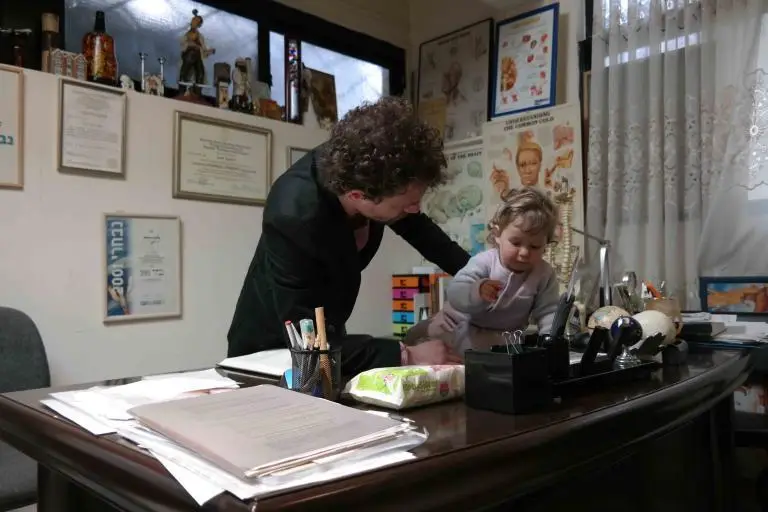
The clinic uses a proprietary method of cranio-cerebral stimulation (from the Latin cranio - skull, cerubrum - brain, stimulation - activation). The method aims to activate underactive areas of the brain. Developed by Dr. Lev Levit, it is a painless and very gentle treatment. It involves a barely perceptible touch to the head and spine—very light and gentle manipulation of the child's body. For more information about the method and its mechanism of action, read the article "About Dr. Levit's Proprietary Method."
What diseases can you help with?
We treat children with birth trauma, vaccination complications, mental and psychophysical developmental delays, autism spectrum disorders, and cerebral palsy. We also provide interventions for children with genetic disorders.
The list of violations is here.
What are the results of treatment?
Every child is unique, and so are the treatment results. Some children have had their serious diagnoses removed. Others have seen modest improvements, which nevertheless bring great joy and hope to their parents.
Learn more about the treatment results at Dr. Lev Levit's rehabilitation center.
How many procedures are needed to see results?
Every child responds differently to treatment. A full course consists of 30 sessions, but some children only need two or three. They show immediate improvement during the first few sessions, and there are no setbacks. Some children progress well after a course of treatment, then regress after two months, followed by further improvement. Others only see positive changes two or three months after the first course of therapy.
How long does the positive effect last after treatment? Is there regression?
"It happens. Regular maintenance therapy is definitely necessary. Eight out of 10 children achieve significant improvement. Each child responds differently to treatment. Some children show immediate improvement during the first few sessions, and they never experience setbacks. Others make good progress after a course of treatment, then regress two months later, only to see improvement again. Others only see positive changes two to three months after the first course of therapy." (L.I. Levit)
At what age is it best to start treatment?
Up to what age of child can you help?
The sooner you see a doctor, the better your chances of helping your child. Generally, children under one and a half to three years of age progress faster than older children. However, improvement is possible at any age, even into your 30s.
How long does the course of treatment last and what is its cost?
We would like to come to your clinic for treatment.
Is it possible to stay?
The average treatment course lasts 2-3 weeks, depending on the child's condition. Our center is located in Israel. We assist our parents in finding housing, which can be an apartment near the clinic or a hotel, depending on the preferences of the parents and young patients. Accommodation costs for a couple with a child during the peak season range from $120-140 per day. If you have any further questions, please contact our secretary in Israel.
What to expect from treatment, are there any guarantees?
"No. Cranio-cerebral therapy is a consistent, often long-term process. If I hear parents asking for a guarantee of recovery, I immediately say, 'This isn't for me.' Every case is individual. We treat children with psychophysical and mental developmental delays and autistic conditions, but it's not clear in advance whether this time there will be a quick positive effect or how strong it will be. I can only rely on my own experience." (L.I. Levit)
Will the treatment need to be repeated?
– Why do some children improve quickly, while others need repeat courses?
"There are several reasons. If a child is hardened, they have a high resistance to colds, and the effect of cranial therapy lasts longer. Much depends on the presence of viruses, their activity, helminthic infestation, and the state of the thyroid gland. The child may have a metabolic disorder associated with the absorption of gluten and casein. In many children, vaccinations trigger serious autoimmune processes that are difficult to treat." (L.I. Levit).
Are there any additional treatments?
Dr. Lev Levit's proprietary cranio-cerebral stimulation method is combined in the clinic with Mikhail Levit's proprietary LTP method, which allows for understanding, monitoring, and interacting with children with any condition, including ASD (autism spectrum disorder), mental retardation (mental retardation), and speech delay (psychospeech delay). Training in this method consists of two parts: individual and group.
Individual:
Psychotherapeutic - (psycho - soul) (therapy - treatment) consulting.
Parents come to meetings—usually one or two sessions are sufficient—with a prepared list of questions. These questions consist of everyday difficulties and problems for which the parent lacks answers and solutions. For example, a child throws tantrums, becomes fixated, won't stop watching cartoons, doesn't respond to parental requests, refuses to study, doesn't play with other children, and so on. Parents are given instructions on how to deal with specific problems and how to establish effective communication with their children. The method is completely original, easy to implement, and dozens of times more effective than any currently available methods. You can receive feedback on the method from parents who have used it.
Group:
8-day training on communication with children.
This communication training course was developed by Lev Levit and Mikhail Levit. Group sessions for parents focus on improving interactions with their children. The training covers specific tools for managing tantrums and improving a child's concentration. After the training, parents will be able to effectively understand, interact, and control their children in any situation. Most importantly, their child's desire to help them (and not you) may sound unrealistic, but it's true. The parents themselves, who can be seen on our Instagram account, provide proof.
The goal of the classes is to provide effective tools for calm and productive communication with a child in any situation.
Do you also treat children with genetic diseases?
It's impossible to cure these children, but their condition can be improved. Genetic diseases disrupt biochemical processes. Treating children with genetic disorders using cranio-cerebral therapy can improve metabolism, resulting in improved speech and concentration. The genetic pathology remains, but its consequences are less severe. Almost all children with Down syndrome, Rett syndrome, and other genetic disorders showed improvement after treatment.
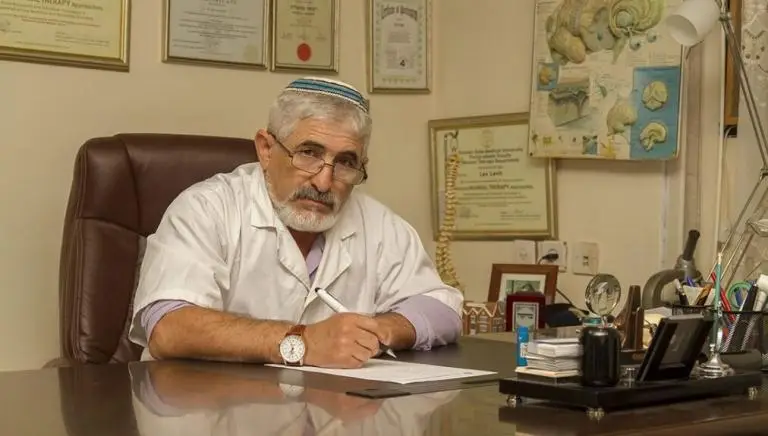
The head of the center, Dr. L.I. Levit, answers:
Is this autism or a developmental delay?
"It's important to identify the child's difficulties. We often receive calls from parents who don't understand the root of their child's problems. For example, a mother might say her three-year-old son doesn't speak and has a speech delay. It then turns out that not only does the child not speak, but he also doesn't understand spoken language, doesn't play with his peers, doesn't make eye contact, and has frequent tantrums and strange behavior. This means the child not only has a developmental delay but also exhibits autistic traits."
Children with developmental delays typically have problems with comprehension. They learn simple commands like "give," "put," but are unable to complete a multi-step task, such as picking up a ball and placing it on a shelf. Furthermore, these children typically experience developmental delays from the first months of life.
How do you know if therapy is helping your child?
"Parents usually notice improvements in their child's behavior and psycho-emotional state after the first few sessions. There are some exceptional cases, too. One of our patients' teeth cleared of black plaque after therapy... The mother shared her video story, which you can watch here."
The fact is that even through such hard tissue as tooth enamel, the body can be cleansed. Furthermore, patients experience improvements in the condition of their skin, hair, and nails. Rough areas of skin become softer and more supple. Hair follicles begin to better absorb toxins and heavy metals. As a result, hair becomes manageable, soft, and shiny, whereas previously it was dull, brittle, and lackluster.
A similar effect on hair structure and growth occurs during chelation, which involves removing heavy metals from the body through a special method. However, while medicinal chelation has its share of side effects, cranio-cerebral therapy (from the Latin cranio meaning skull and cerubrum meaning brain) has none.
My child was diagnosed with regressive autism. What's the cause? Why? What went wrong?
Typically, these children develop normally, according to their age, until they're one to one and a half to two years old, but then suddenly regress. They stop speaking, understanding, and making eye contact. Hyperactivity, autistic behavior, and stereotypical, repetitive movements are evident. These children are diagnosed with regressive autism.
If we analyze the chain of events, we most often see a connection between vaccination and the onset of regression in children. Parents often report that after vaccination, their children begin crying and screaming, which lasts for weeks. In some cases, a fever develops that cannot be brought down by conventional means. This reaction is most often attributed to adenovirus infections or colds.
Sometimes the connection between autism and vaccinations is more difficult to establish when vaccinations have caused developmental problems from the very first days of life. Sometimes there are multiple causes—a combination of birth trauma, viral load, and vaccination.
When should you worry about developmental delays?
"You need to look at the whole picture. If a child doesn't speak but is otherwise developing normally—communicative, able to concentrate, engaged in age-appropriate games—I wouldn't be too concerned. But if the situation is different, for example, if the child was making progress until age eighteen months and then suddenly stops developing or starts to slide back, you need to sound the alarm. If a child was saying 10-15 words, and then they disappear one by one, you can't ignore it! If the child suddenly loses concentration, cries for no reason, or has outbursts of aggression—these are alarming signs."
In video testimonials, parents talk about how their child's body is cleansed (they go to the toilet more often, the coating on the tongue disappears, etc.). How does this work?
Children with developmental delays, autism, and other neurological conditions often have metabolic disorders. Their bodies cannot effectively eliminate toxins. Therefore, they may eat poorly, fail to gain weight, or, conversely, gain significant weight. In addition to mental and cognitive improvements, physiological changes are immediately apparent.
In our work, we focus on improving metabolism. This results in improved movement of tissue fluid, lymph, and cerebrospinal fluid. During treatment, most young patients experience systemic cleansing. Many children begin to sweat profusely and urinate more frequently, although they continue to drink. The color and odor of urine changes, and it becomes more concentrated. Stool volume increases, and constipation disappears.