In autism, one of the most prominent characteristics of this condition, by which this disorder is diagnosed, is stereotypy (stimuli, self-stimulation, self-regulating behavior). (American Psychiatric Association, 2000)
Reasons, Why is the diagnosis of autism accompanied by stereotypes?, have not yet been identified by any study (Koegel & Covert, 1972; Lovaas, Newsom & Hickman, 1987; Rapp & Vollmer, 2005; Rogers & Ozonov, 2005)
When consulting with specialists, parents of children with autism often hear the phrase "stereotyping is bad, it needs to be fought and stopped." Is this really true?
Early childhood autism and stereotypy
Stereotypy is a general term that encompasses several types of regular behavior in children diagnosed with autism: daily meaningless movements of body parts, spoken words, phrases, or sounds. Furthermore, children with autism may also engage in stereotypy by using everyday objects, such as bottles, pens, shoes, and so on.
Autism implies the following variants of stereotypy manifestation:
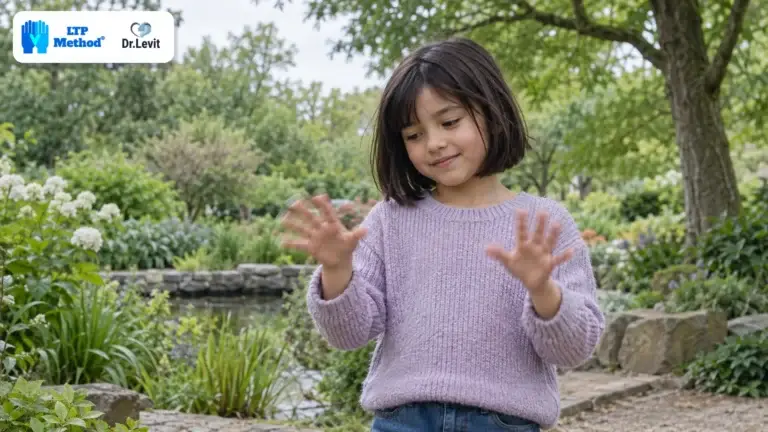
- Motor (vestibular): manifests itself in rocking in place, running in circles or from one point to another, flapping arms (like a butterfly), clasping an object or in one place.
- Tactile: This type of stereotypy is associated with the sensations of touching objects. For example, children scratch wallpaper, shoes, and textured furniture.
Gustatory: this type of stereotypy is expressed in licking certain objects (for example, a swing on a playground), constantly putting inedible objects into the mouth (for example, paper, stones, plastic). - Olfactory: long sniffing of a parent or another person, household objects.
- Visual: prolonged concentration of attention on some object, for example a fan, a clock.
- Sound (auditory): children’s desire to make sounds with different parts of the body (stomping their feet, clapping their hands, moaning for a long time, snapping their fingers).
Is stereotyping an exclusively negative aspect?
Autism diagnosis and stereotypy are inextricably linked. It can be seen that each type of stereotypy is associated with the senses and represents a complex set of signs and manifestations. This is why stereotypy plays a very important role for children with childhood autism.
Stereotyping is not exclusively a characteristic of children diagnosed with autism. This type of behavior is characteristic of other types as well. developmental disorders or delays.
For example, children with mental retardation also exhibit stereotypy (Bodfish, Symons, Parker & Lewis, 2000). Furthermore, typically developing children and even adults may also exhibit stereotypical behavior:
- swinging legs,
- tapping with objects,
- biting nails, skin of fingers,
- hair curling
– turning lights on and off, etc.
Very often, this behavior resembles behavior diagnosed with autism (Smith & Van Houten, 1996).
In autism, stereotypy isn't just a way for children to withdraw into themselves. Every instance of stereotypy is a response to an external or internal factor.
Causes of stereotypical behavior
Common reasons for the “trigger” of stereotypical behavior are:
- anxiety and worry,
- a manifestation of joy,
- learning new things,
- the need to concentrate.
This is why stereotypical behavior can be conditionally divided into two types:
1. positive – expression of emotions, needs, feelings, way of interaction.
2. Negative – actions that are beyond the child’s control, occur in inappropriate conditions, or interfere with the child.
In autism, is it necessary to actively combat stereotyping?
A diagnosis of autism is often accompanied by a complete or partial lack of speech in children. This makes it difficult for children to interact with the outside world and express their desires, emotions, and feelings.
That is, each manifestation of a stereotype carries its own meaning: a way of calming down, self-expression, attracting attention, a reaction to some external factors, a way of interacting with other people and the outside world.
This is why there is no need to actively combat stereotypy, because most of its manifestations are not dangerous and do not require urgent treatment.
Stereotyping should never be discouraged solely based on social norms, as it is completely healthy and typical child behavior. However, if the stimuli become uncontrollable, are repeated frequently throughout the day, and are interfering with the child, it is necessary to help them resolve the problem.
How to reduce or completely eliminate stereotypes?
One of the reasons for the regular occurrence of stereotypical behavior in children with autism is a communication disorder (the desire to receive and give attention) and physiological problems. These two causes require immediate attention.
Because children diagnosed with autism are unable to express their feelings, emotions, and desires, phenomena such as tantrums and aggression occur, and in order to calm down and regain balance, they begin to stim.
Moreover, in addition to the problem at the physiological level, children diagnosed with autism further aggravate the situation.
For example, when you're feeling unwell or sick, your ability to communicate is significantly reduced. The body focuses all its energy on fighting the cause of the illness, trying to return to normal. The same is true for children diagnosed with autism: their physiology is impaired, so their ability to provide attention is reduced.
Stereotyping can be a healthy and effective way for children diagnosed with autism to release pent-up energy and gain useful information from the world around them.
The most common causes of almost any stereotypical behavior are:
– problems with the gastrointestinal tract;
- stress;
- hysterics;
- aggression;
- bad dream.
It is necessary to start with what causes this kind of condition.
The unique proprietary LTP® method Israeli specialist Michael Levit's research is primarily aimed at solving physiological problems and restoring communication in children with autism who suffer from stereotypical behavior.
Thanks to the recovery system using the unique proprietary LTP® method for children with autism:
– Hysteria and aggression go away
– Stereotypical behavior is reduced
– Improves memory and attention
– New knowledge is acquired and interaction with the surrounding world occurs
– Interest in everything new awakens
– There is a need for attention and support from loved ones
– The level of speech increases and vocabulary expands
– A desire to actively participate in household chores and to happily fulfill parents’ requests awakens